Start a regional campaign to collect accessibility information from localities in your community or city.

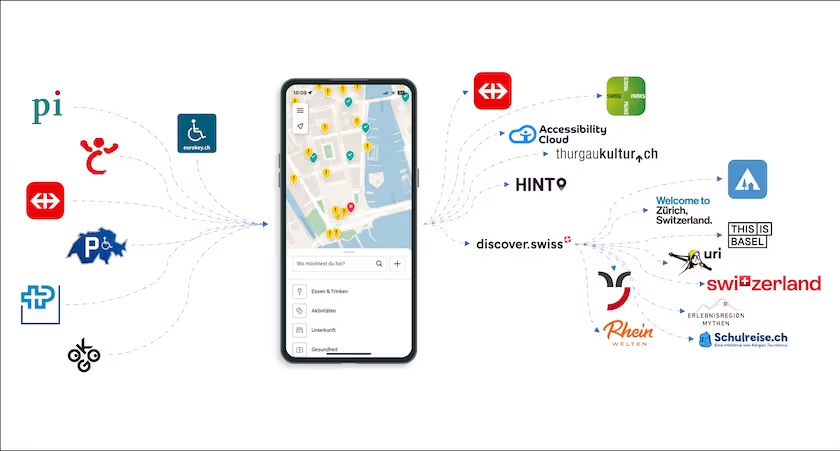
To find answers to these questions, people with disabilities often have to spend hours researching. Local staff are usually overwhelmed by this question, because what does “accessible” actually mean and to whom does what apply? This is where Ginto comes to the rescue. Ginto collects and shares objective information about the accessibility of locations. In this way, people with disabilities can decide for themselves how accessible a place is for them. Accessibility information also relieves administrative staff and creates long-term benefits for the population.
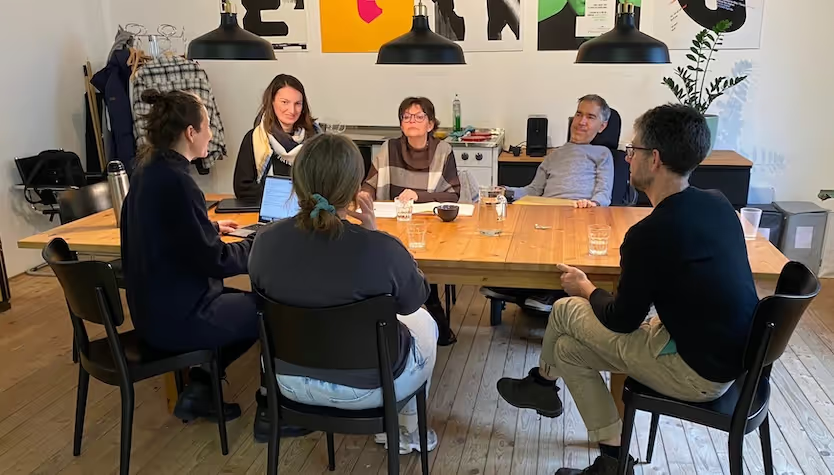
Many municipalities and cities are pursuing an inclusion strategy. Ginto offers you a concrete and low-threshold solution for social sustainability. Basically, you can record the information about the accessibility of locations in your community yourself with Ginto at any time. Professional recording by experts from Pro Infirmis is recommended if you want comprehensive and coordinated recording. This method is particularly ideal for complex systems such as educational institutions or administration buildings with several buildings. By publishing accessibility information, you are sending a strong signal for inclusion in your community and laying the basis for further important measures.
First, an inventory is carried out: Which and how many localities in your community should be recorded? How extensive and complex are the structures of the buildings to be covered? The Pro Infirmis team then creates an individual offer. After clarifying the framework conditions and agreeing on costs, Pro Infirmis takes care of coordinating appointments and recording them professionally. The information collected is checked on a four-eye basis and published with the corresponding seal of approval “audited by a specialist organization”. The information is immediately available via the Ginto app and the Ginto web map. You can also share them via your municipality's website or other platforms — as natural as opening hours. By the way, the information is also valuable for families with strollers or people with temporary mobility restrictions, for example after injuries or in old age.